
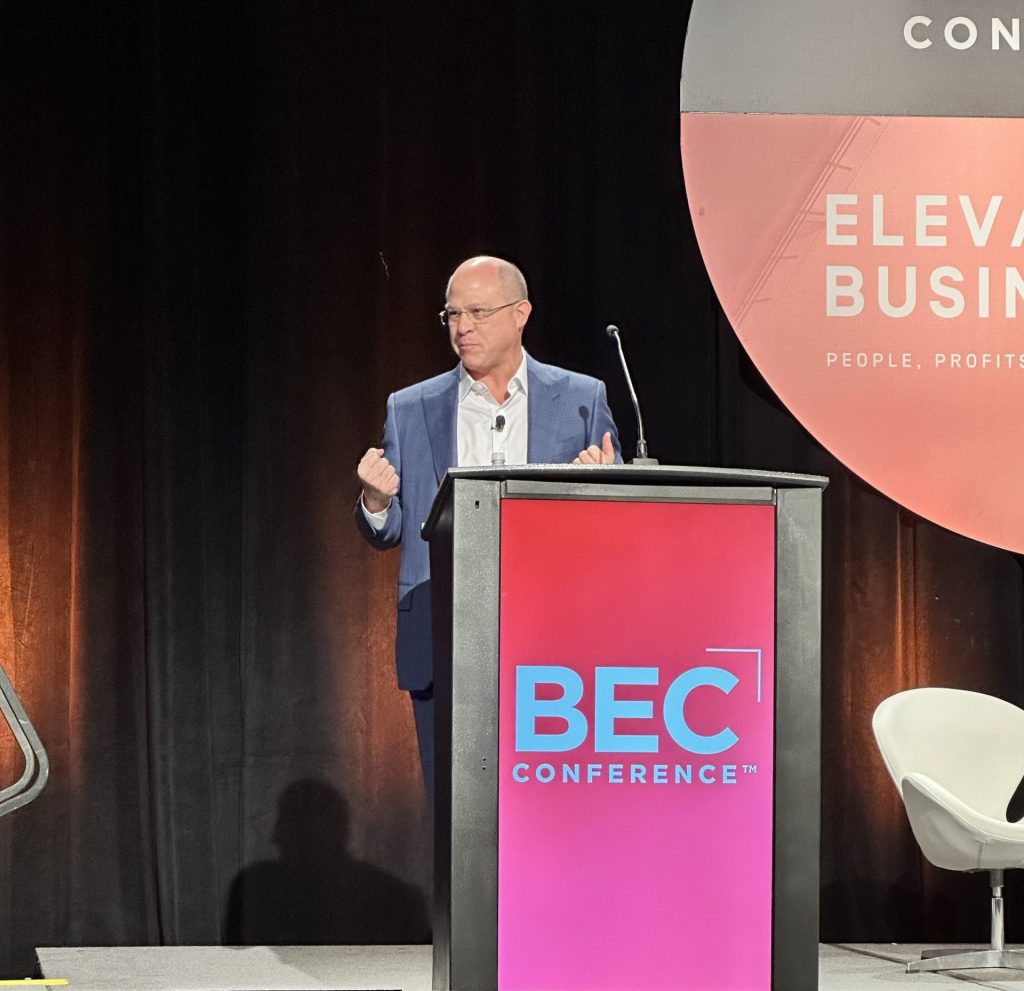
Jeff Haber, a managing partner with W&W Glass, knows what it takes to run a contract glazing business. He brought his 40 years of experience in the glass industry to the stage during the Building Envelope Contractors (BEC) Conference underway this week in Las Vegas. Haber offered a “back to basics” state-of-the-glazing-industry discussion, sharing some insights into market conditions and segments, trends and more in an effort to help companies prepare their businesses for the future.
“Right now it’s messy out there,” Haber shared of the market. He said a lot of companies have bids out that haven’t been awarded. While a lot of jobs are held up, he said depending on the location, some areas will be busier while others remain slow.
Among the challenges are what he called “the big unknowns.” For example, most everyone is wondering what will happen with tariffs.
“We all just have to be vigilant and protect ourselves … You have figure out what’s best for your own individual business.”
Haber said some opportunities in some market segments are keeping companies busy, including institutional and infrastructure projects such as airports and transit hubs; hospitals, universities; and security glazing/schools.
Renovation and retrofit is another big segment. “That is where there will be a huge opportunity because there is so much building stock,” said Haber. “And it doesn’t matter what city you’re in because there are so many older buildings.”
There are also a few different ways to approach these projects. For example, you can rip out the old façade and install a new one or install an over clad. Haber said they are also seeing lobby repositioning projects. These involve taking an old system and updating it to attract a new tenant or to retain the current tenant.
Haber said that, though complicated, commercial-to-residential conversions are also happening. Drivers include high vacancy rates, housing shortages, government incentives, the cost of new ground-up construction, as well as shifting work patterns such as hybrid and remote work.
Haber also talked about some trends affecting the market. These include the demand for enhanced energy and thermal performance requirements; changing building codes; acoustic performance—particularly as cities become denser with residential developments; and security/forced entry.
Haber said that consolidations and acquisitions are a growning industry trend, as is the exit of some companies from the industry.
“There will be a lot of things we have to deal with as an industry to manage our businesses going forward,” he said.
Haber said to help navigate these changing market dynamics, it will be important to focus on core business tasks. These include those “basics” such as estimating, engineering, financial management, recruitment and retention, and the “intangibles.”
“Are the corporate leaders invested in all phases of the company? Are your customers happy? Are you staying current with industry trends?” he asked, adding that risk management and safety are also essential.
Haber reminded his audience of several keys necessary in preparing for the future: focusing on your competencies; investing in your people; embracing technology; strengthening supplier and customer relationships.
“The possibilities of what we get to do are endless.”
The BEC Conference ends tomorrow. Stay tuned to USGNN for more reports and news from the event.